F&F Surface Group · Flooring Guide
Which Hardwood Finish and Sheen Should You Choose?
Updated August 25, 2026 · 7 min read
People spend weeks choosing a stain color and about four minutes choosing the finish and the sheen, which is backwards. The stain decides what color the floor is on day one. The finish decides how it ages, how long you are out of the house, and how every scratch for the next decade will look — and the sheen changes how a room reads as much as color does.
The three finishes you will actually be offered
Water-based polyurethane is what most modern refinishing jobs use. It dries fast, so coats can often go on the same day or the next, and the whole job compresses. The smell is mild and clears quickly. It also dries clear and stays clear, which means the floor keeps the color the stain gave it rather than drifting warmer. For a white oak floor finished natural, or any pale or gray-leaning color, that clarity is the whole point.
Oil-based polyurethane is the traditional choice. It cures more slowly and it smells strongly while it does, so the house is genuinely disrupted for longer. What you get for that is a warm amber tone that goes into the floor and keeps deepening over the years. On red oak and on heart pine in an older house, that amber is often exactly right — and trying to get the same look from a clear finish never quite works.
UV-cured finishes are cured instantly by an ultraviolet lamp rather than by air. Factory UV curing is what makes prefinished boards so hard-wearing: those conditions cannot be reproduced on a jobsite, which is why the warranties run so long. Site-applied UV systems exist too, including UV-cured oils, where a lamp follows the applicator and the floor is fully cured behind it. The appeal is obvious in an occupied house or an office — the floor is in service the same day.
Hardwax oil is the outlier and worth knowing about. It penetrates the wood instead of forming a film, giving a very natural, matte, close-to-bare-wood look that photographs beautifully. Its real advantage is repairability: a worn patch by a door can be cleaned and re-oiled without refinishing the room, which is a genuinely different maintenance model. The trade is a maintenance coat every few years and a much shorter list of cleaning products you are allowed to use.
How to choose between them
- You need the house back quickly → water-based, or a UV-cured system.
- Someone in the house is sensitive to smell → water-based or UV. Oil-based is a real imposition for several days.
- You want warm, traditional amber → oil-based, and accept the schedule.
- The color is pale, white, gray or a precise custom match → water-based, because oil will pull it warmer than the sample you approved.
- You want to spot-repair rather than refinish → hardwax oil.
- It is a commercial floor or a rental turnover → the fastest cure available usually wins. See commercial flooring.
Sheen is a bigger decision than people think
Sheen is how much light the finish reflects, and it runs from matte through satin and semi-gloss to gloss. It is not a detail — it changes the character of a room and it decides how much wear you will see.
Matte reflects the least and hides the most. Scratches, dust, pet hair and footprints all substantially disappear. It reads modern and understated, and it is what we specify most in contemporary spaces through the North Bethesda and Pike & Rose corridor.
Satin is the workhorse and the safe default. Enough sheen to look finished rather than raw, not enough to broadcast every mark. If you are unsure, this is the answer.
Semi-gloss reads formal and traditional, and it suits period detail and grand rooms. It shows considerably more wear than satin.
Gloss is a magnifying glass. Every scratch catches light along its length, dust is permanently visible, and in a house with dogs it looks tired within a year. It has its place in a formal room that is rarely walked; it is the wrong choice almost everywhere else.
Where light makes the decision for you
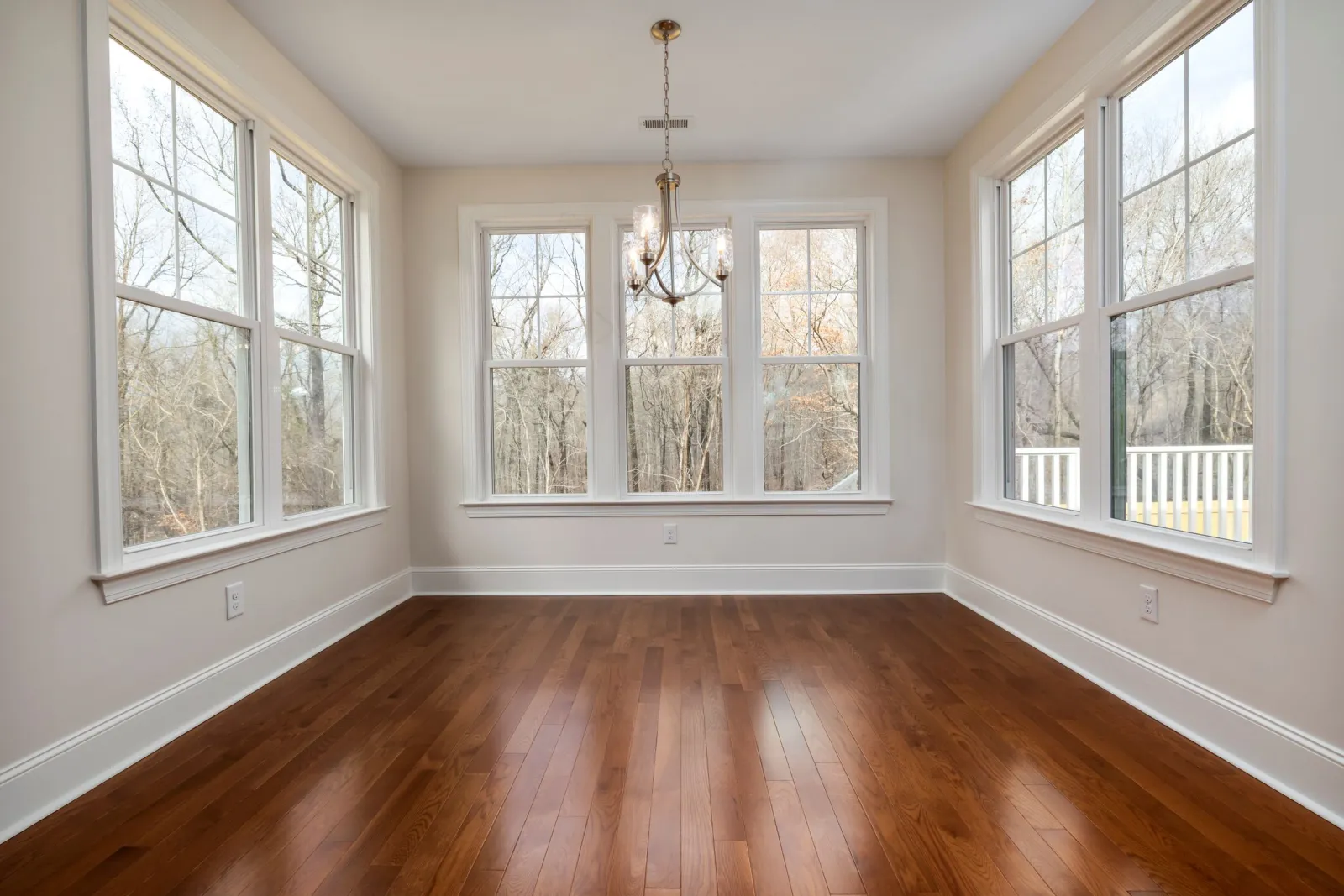
A long open span with big windows — common in the estate homes along Falls Road and through McLean — puts the floor under raking light for hours a day. Raking light is the least forgiving condition there is: it finds every scratch, every drum mark and every swirl from an edger. On floors like these, a lower sheen is not a style preference, it is a practical requirement, and the sanding sequence has to go further than a standard job needs.
Conversely, a north-facing room with modest windows can carry more sheen than you would expect, because there is never enough directional light to expose it.
Two things to insist on
Sample on your own floor. A stain chip on a manufacturer card is applied to a different piece of wood in different light. We prepare samples on your boards, in your room, and look at them at two times of day. This matters more than any other step and it costs nothing but a delay of a day. More on that in choosing a stain color.
Sample the sheen too, not just the color. Sheen is chosen from a word on a can far more often than it should be. Two boards, same stain, different sheen, side by side on the floor, is a thirty-second decision once you can see it.
What the finish means for cleaning
The finish you choose sets the rules for the next decade. Polyurethane wants a pH-neutral hardwood cleaner and nothing acidic; hardwax oil wants its own product line and will be damaged by ordinary floor cleaners; nothing tolerates a steam mop. Our guide to cleaning and maintaining hardwood covers the routine, and it is worth reading before the finish is chosen rather than after.
Frequently asked questions
Is water-based or oil-based polyurethane better?
Neither is better in the abstract. Water-based dries fast, smells far less, and stays clear so the wood keeps the color it was stained. Oil-based cures more slowly, smells strongly while it does, and adds a warm amber tone that deepens over the years. Choose water-based for speed, low odor and color accuracy; oil-based when you want that traditional warmth and can give up the house for longer.
What is a UV-cured finish?
A finish cured instantly by ultraviolet light rather than by air over hours or days. Factory-applied UV finishes are what make prefinished boards so hard-wearing. There are site-applied UV-cured systems too, including UV oils, where a lamp passes over the floor and the coat is fully cured behind it — which means you can walk on it the same day.
Which sheen hides scratches best?
Matte, by a distance, then satin. Gloss acts as a magnifying glass: every scratch catches light along its length, and dust and pet hair show constantly. If a floor has to look good with dogs, children or a busy hallway, matte or satin is the single most useful decision you can make.
What is a hardwax oil finish?
A penetrating oil-and-wax finish that soaks into the wood rather than forming a film on top of it. It gives a very natural, low-sheen look and it can be spot-repaired — a worn patch is cleaned and re-oiled without refinishing the whole room. The trade is a maintenance coat every few years and a narrower list of cleaning products you can use.
How long before I can walk on a newly finished floor and move furniture back?
Walkable in socks is usually within a day for water-based and longer for oil-based, but full cure is a separate thing from dry. Rugs and heavy furniture generally want to wait considerably longer than the walk-on time, and mid-Atlantic humidity stretches both. Your installer should give you two dates, not one.
Planning a refinish? Request a free in-home estimate and we will go through finish and sheen with samples on your own boards before anything is committed — and give you honest dates for walk-on and for furniture, which are not the same date.