
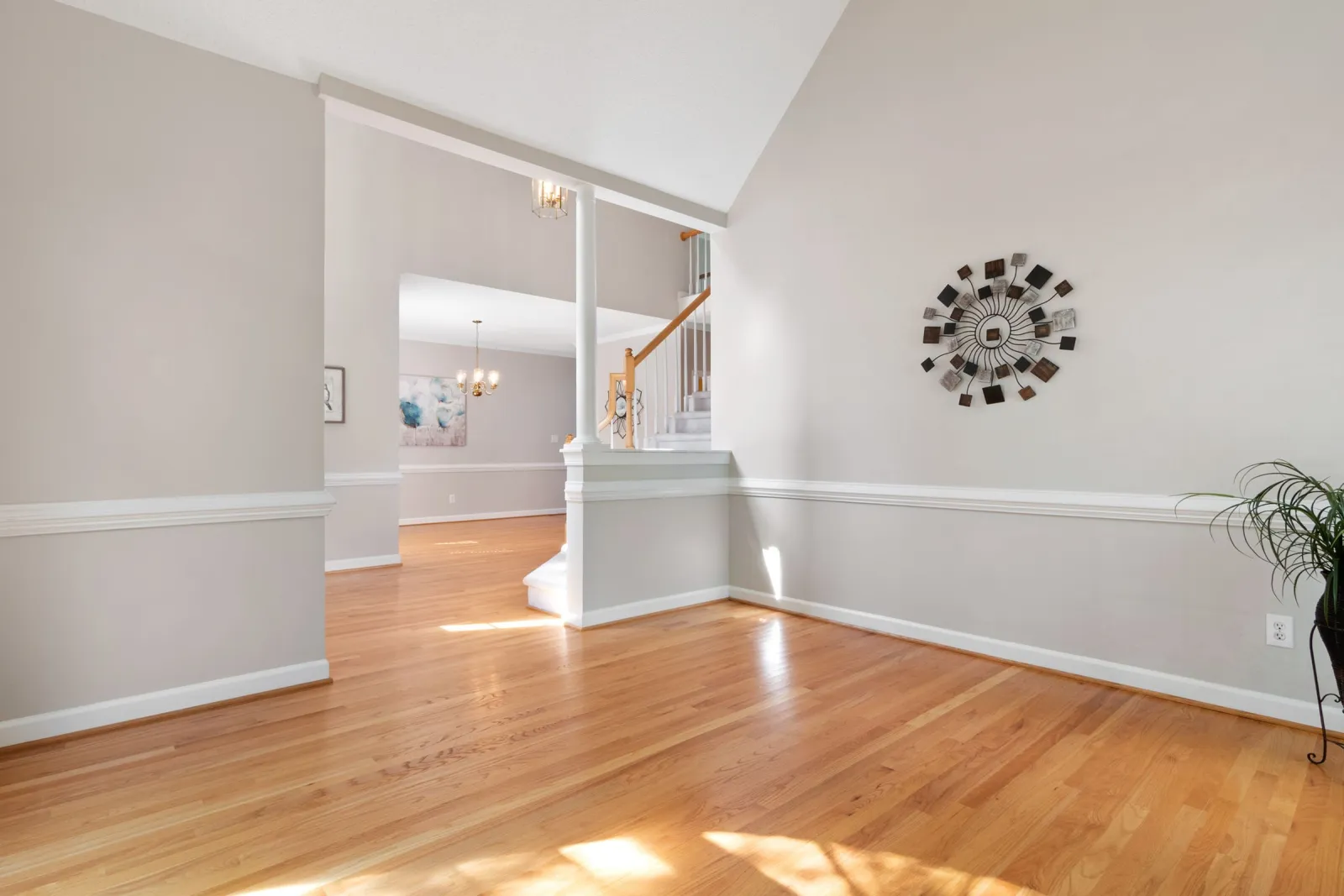
Hardwood · Solid
Solid Hardwood Flooring, Installed the Traditional Way
Three-quarter-inch solid boards, nailed down, sanded flat, and finished in your home. The floor that outlasts every trend — and can be refinished for generations.
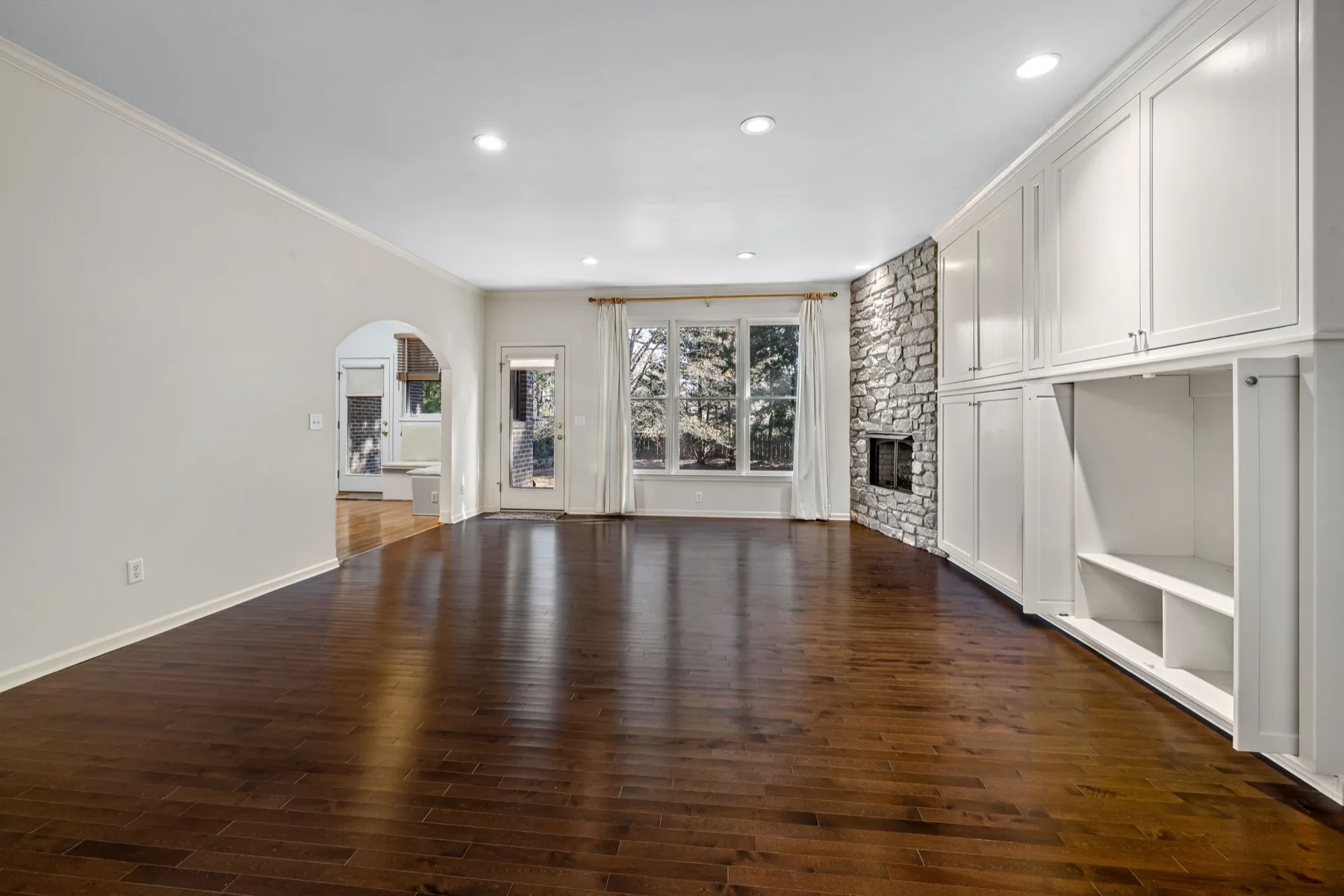
Solid hardwood is exactly what it sounds like: each board is one piece of oak, maple, hickory, or walnut, milled to 3/4" thick. Nailed over a plywood subfloor, sanded flat as one surface, and finished in place, it becomes a floor that can be sanded back to fresh wood four, five, six times over its life. In a DMV market where buyers actively look for real wood, it is the single most value-dense floor you can put in a home.
Best above grade
Solid wood moves with humidity, so it belongs on main and upper levels over plywood — living rooms, dining rooms, bedrooms, halls, stairs. For basements and concrete slabs, its cross-ply cousin is the right call — see engineered hardwood below.
Site-finished means custom
Because we sand and finish after installation, you choose any stain on your actual floor — we sample colors on your boards, not a brochure. The result is a seamless, furniture-grade surface with no factory bevels between boards.
The DMV humidity reality
Mid-Atlantic summers swing humid, so every solid install starts with moisture readings and on-site acclimation, and ends with correct expansion gaps hidden behind baseboard. Skipping those steps is how floors cup — we never do.
Refinishable for decades
A solid floor is a 50-to-100-year floor. Scratches, wear, even deep stains disappear with a professional sand and refinish — and you can change the color completely each time. It is the only floor that gets to start over.
Not sure solid is the right fit? Engineered hardwood handles slabs, basements, and condos where solid can't go, and prefinished hardwood trades custom stain for a one-day, dust-free install. Both are real wood — the difference is construction, not quality. Our hardwood overview compares all three, and if you already have wood floors worth saving, refinishing costs a fraction of replacement.
The work
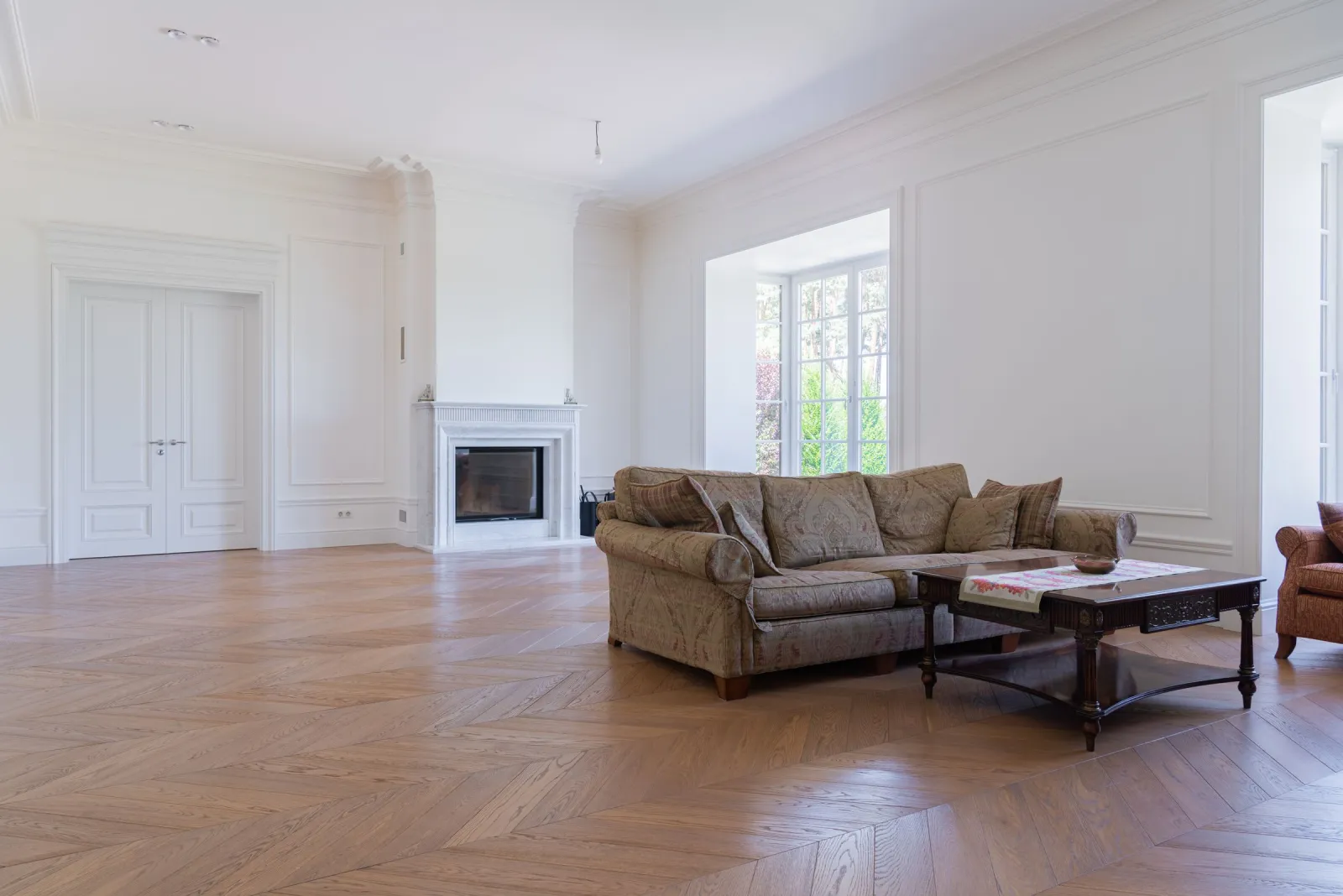
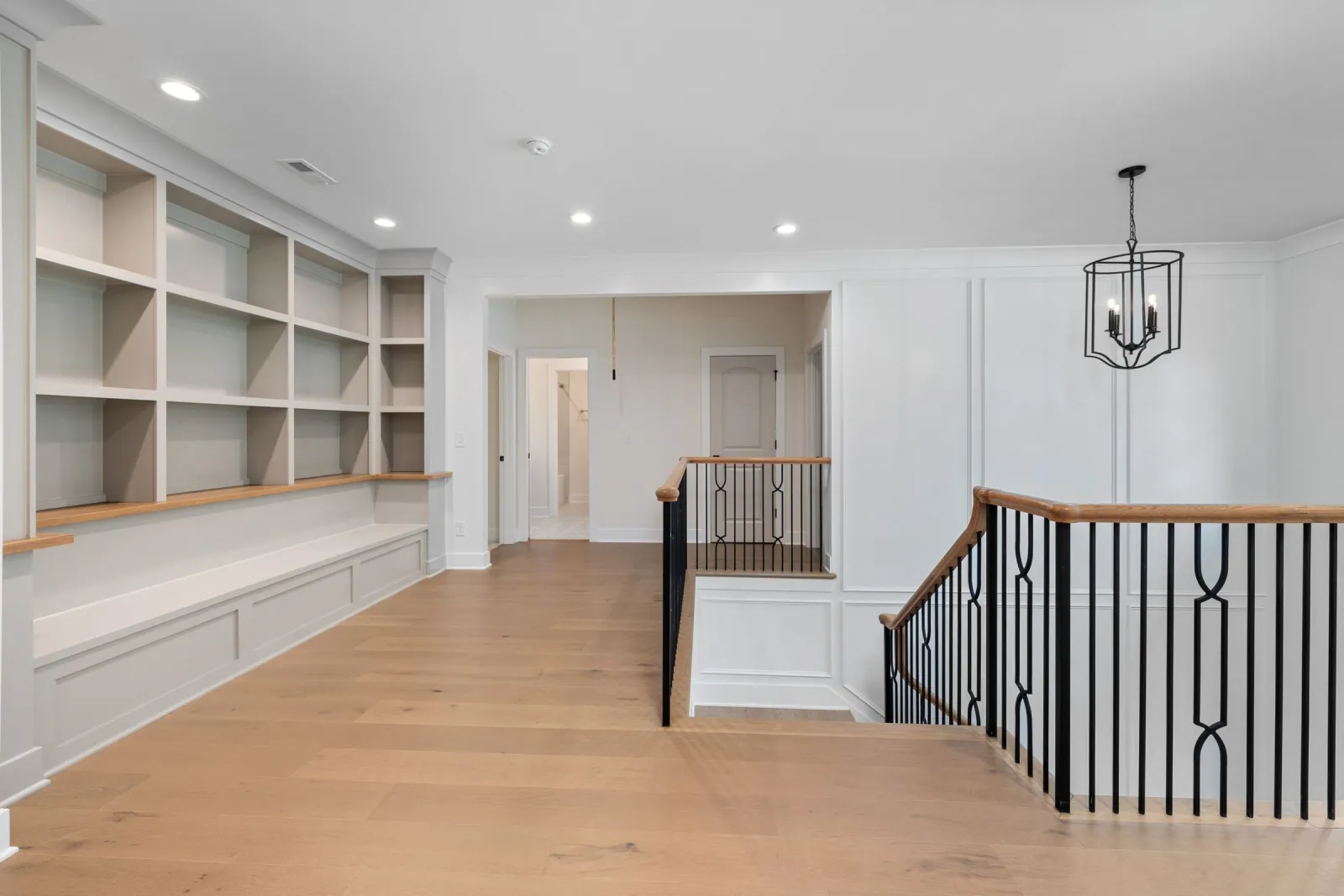
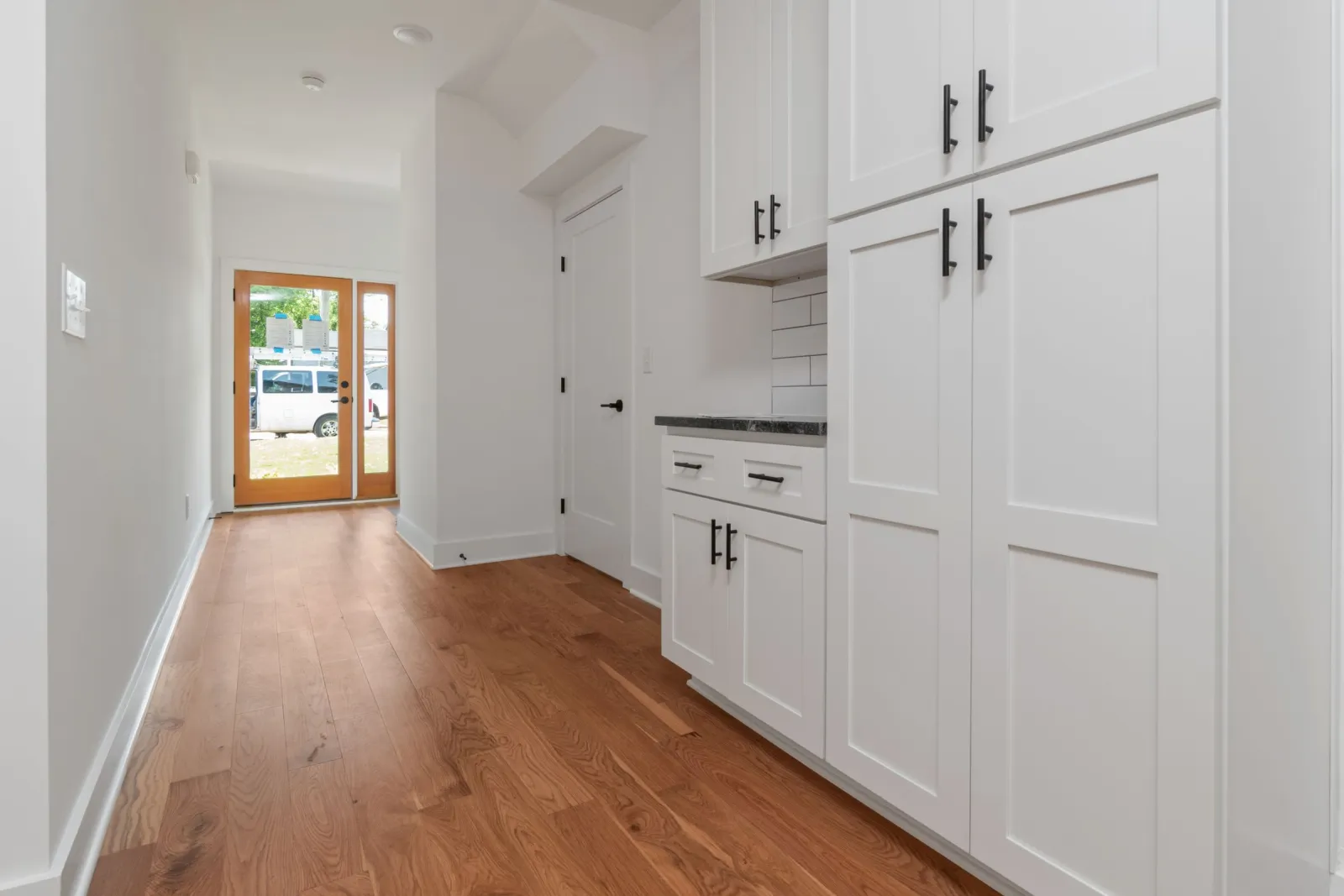
The species, in plain English
Red & White Oak
The DMV standard for good reason: strong, refinishable, takes any stain, and matches most existing floors. White oak runs subtler in grain and slightly harder; red oak warmer in tone. When in doubt, oak is the right call.
Maple
Noticeably harder than oak with a clean, fine grain that suits modern rooms. It takes light finishes beautifully; dark stains on maple can blotch, so we finish it with the systems made for it.
Hickory
The hardest domestic species we install — dramatic grain variation, nearly dent-proof. The right answer for big dogs and busy families who still want real wood.
Walnut
Deep chocolate tones straight from nature, no stain needed. Softer than oak, so we place it in living and dining spaces rather than mudrooms, where it is simply the most beautiful floor money buys.
Testimonials
What DMV Homeowners Say
“Fred and his team refinished the original oak in our 1940s Bethesda house and it looks better than any new floor we considered. Dust-contained sanding meant we could stay home the whole time.”
“We put waterproof LVP through the whole main level and basement. The seams are invisible and it has already survived two kids and a dog. Fair price, spotless job site.”
“F&F installed wide-plank white oak across our entire first floor. The transitions and stair work are flawless — you can tell these are real craftsmen, not a subcontracted crew.”
Common questions
How thick is solid hardwood, and why does it matter?
Standard solid boards are 3/4" thick with roughly 1/4" of wood above the tongue — that's the sandable layer, and it's why a solid floor can be refinished many times where thinner floors cannot.
Can solid hardwood go in a basement or over concrete?
No — below grade or directly over a slab, seasonal moisture will move solid boards too much. That's exactly what engineered hardwood was invented for; we install it there instead and it looks identical underfoot.
Which species should I choose?
Red and white oak are the DMV workhorses — durable, refinishable, and easy to match to existing floors. Maple is harder and cleaner-grained, hickory the most rustic and dent-resistant, walnut the richest in color. We bring samples to the estimate.
How long does a solid hardwood install take?
Plan on the wood acclimating on site for several days first, then 3–5 days of installation for a typical main level, plus sanding, stain, and finish coats with drying time if you go site-finished.
DMV Coverage
Solid Hardwood Across the DMV
Professional solid hardwood across the entire DC, Maryland & Virginia metro area.
Washington DC
Montgomery County, MD
- Solid Hardwood in Potomac
- Solid Hardwood in Bethesda
- Solid Hardwood in Rockville
- Solid Hardwood in Chevy Chase
- Solid Hardwood in Silver Spring
- Solid Hardwood in Gaithersburg
- Solid Hardwood in Germantown
- Solid Hardwood in Kensington
- Solid Hardwood in North Bethesda
- Solid Hardwood in Olney
- Solid Hardwood in Wheaton
- Solid Hardwood in Fairland
Prince George's County, MD
Anne Arundel County, MD
Howard County, MD
Free · No obligation
Request Your Free Estimate
Answer a few quick questions, then pick an appointment time that works for you. Takes under a minute.
- In-home measure & written quote
- No pressure, no obligation
- Samples brought to your door
Prefer to talk? Call (202) 317-2745 — we answer 7 days a week.