F&F Surface Group · Flooring Guide
Porcelain vs. Ceramic Tile: Choosing a Tile Floor for Kitchens, Baths and Mudrooms
Updated October 26, 2026 · 9 min read
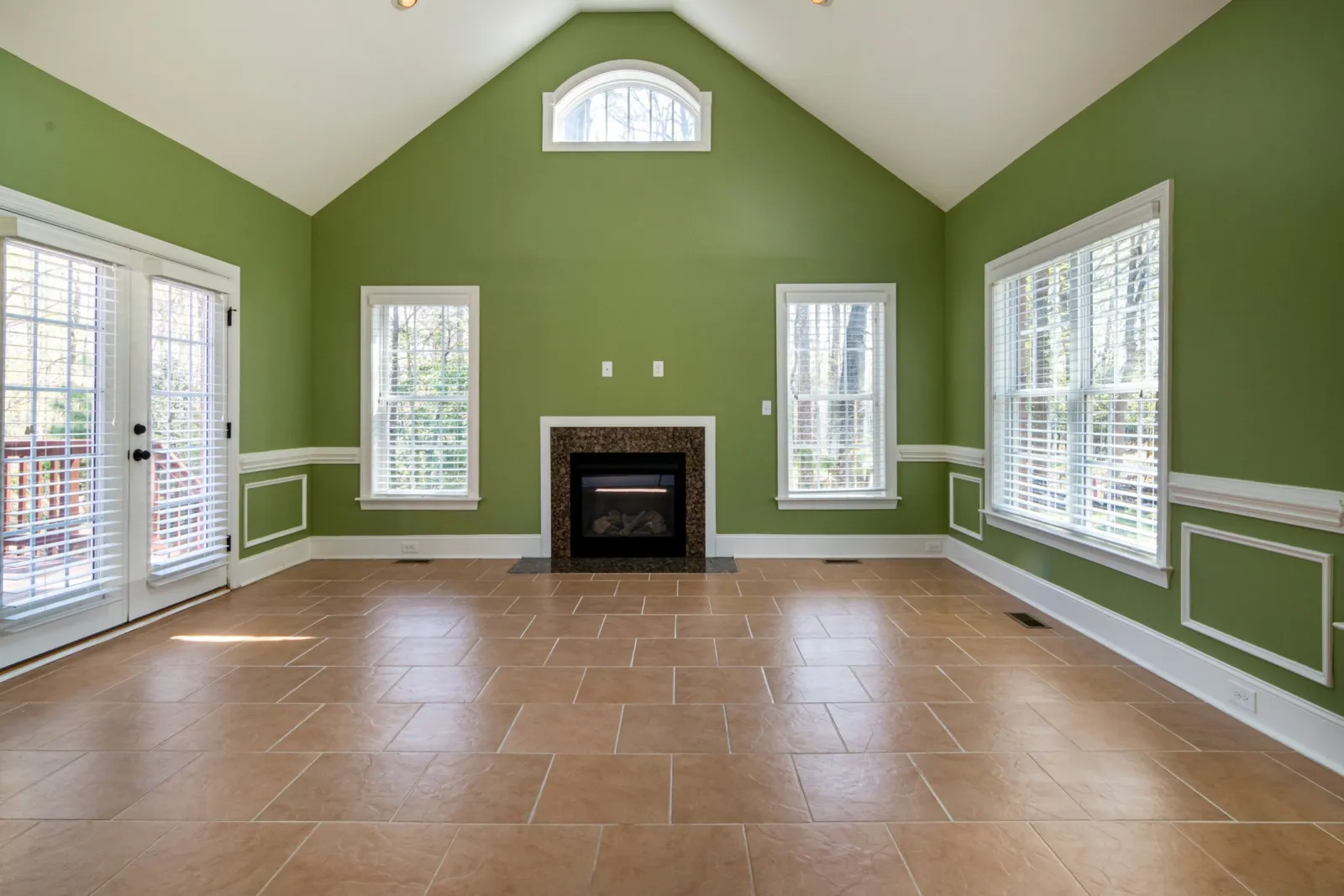
Tile is the floor that shrugs off water, mud and spilled sauce, which is why it keeps its place in DMV kitchens, bathrooms, mudrooms and laundry rooms. The first question most people ask is whether to choose porcelain or ceramic. That matters, but how a tile is rated and what it is installed on matter just as much. Here is how to choose tile that will still look right in twenty years.
Porcelain vs. ceramic: what is actually different
Both are clay fired in a kiln. Porcelain uses finer, denser clay and is fired hotter, which makes it harder and almost impervious to water. Under the ANSI A137.1 standard, a tile must absorb 0.5 percent of its weight in water or less to be sold as porcelain.
- Porcelain is denser and harder, and it is the better choice for heavy traffic, basements, sunrooms and large-format tile. Many porcelains are through-body or color-body, meaning the color runs through the tile, so a chip shows less. It is harder to cut and usually costs more.
- Ceramic is lighter and softer, easier to cut and shape, and generally less expensive. It is a good fit for bathrooms, powder rooms, laundry rooms and lighter-use floors. Its glaze is what faces the room, so a deep chip can show the different-colored body underneath.
In a bathroom, either is waterproof enough, because the glaze and grout are what meet the water. The real difference is durability under traffic and how the tile behaves at large sizes.
The ratings worth checking
Two numbers on the box tell you more about a floor tile than its name.
- Wear rating (PEI). Glazed tiles are rated from class 1, for walls only, to class 5, for heavy commercial traffic. For most home floors, class 3 is enough for bathrooms and bedrooms, and class 4 is a safe choice for kitchens, entries and mudrooms.
- Slip resistance (DCOF). This measures how much grip a tile has when wet. The ANSI standard calls for a DCOF of at least 0.42 for level interior floors expected to be walked on wet. A tile that falls short might be beautiful on a wall and dangerous on a bathroom floor.
Finish matters too. A polished porcelain looks like stone but is slicker than a matte or textured one. Smaller tiles have more grout lines for grip, which is why shower floors use small mosaics.
Large-format and wood-look tile
Large-format tiles, the industry term for any tile with a side of 15 inches or more, give a clean look with fewer grout lines. They also demand more of the installer. The floor has to be very flat, because a large tile will not bend to follow a dip, and an uneven floor causes lippage, where one tile edge sits higher than its neighbor. We use leveling clips on large formats and make sure the thinset covers the full back of the tile.
Wood-look porcelain planks give the look of hardwood in a bathroom or basement where real wood would be a risk. Long planks are rarely perfectly flat, so they are usually laid with an offset of no more than one-third of the plank length rather than a half-offset, which avoids lippage at the center of each plank. If you would like real wood in the room next door, our guide to hardwood in kitchens explains where wood does and does not work.
What goes under the tile
Tile is rigid. It does not tolerate a floor that flexes or a slab that cracks, and most tile failures start below the tile.
- A stiff subfloor. A wood-framed floor that bounces when you walk across it will crack grout and tile. We check the floor for deflection and add support or plywood where it needs it.
- Cement board or an uncoupling membrane. Tile is not set directly on plywood. Cement backer board, or a membrane that separates the tile from the movement of the floor below, gives it a stable base. Over concrete slabs, a crack-isolation membrane keeps hairline cracks in the slab from spreading up into the tile.
- Full mortar coverage. Tile set on spots of thinset has hollow places that crack under a dropped pan or a chair leg. Proper troweling and back-buttering larger tiles prevent that.
Can tile go over an existing floor? Sometimes, over well-bonded tile or sound concrete. Over vinyl, laminate or a springy subfloor, no. That floor comes out and a proper base goes in.
Grout
Grout is the part of a tile floor you clean, so it is worth choosing deliberately. Cement grout is the standard. Sanded grout fills wider joints and unsanded fills very narrow ones, and cement grout should be sealed and resealed every year or two to resist staining. Epoxy and urethane grouts cost more and are harder to install but are highly stain-resistant and need no sealing, which makes them worth considering in kitchens and mudrooms. A mid-tone grout color hides everyday dirt better than bright white.
Tile in DMV rooms
- Kitchens. Porcelain in a matte or textured finish, PEI 4, with stain-resistant grout. Plan the layout so cuts land evenly at the cabinets and doorways.
- Bathrooms. Ceramic or porcelain with a DCOF of 0.42 or higher. Tile pairs well with radiant floor heat, which takes the chill off on winter mornings.
- Mudrooms and entries. Durable porcelain that handles salt, slush and wet boots, with a darker grout.
- Basements. Porcelain on a concrete slab, with a crack-isolation membrane. Water does not hurt it, which makes it one of the best choices for a lower level that has seen moisture. Our basement flooring guide compares it with LVP.
- Sunrooms. Porcelain handles strong sun and temperature swings without fading.
Tile or luxury vinyl plank?
Both are waterproof, and both come in convincing stone and wood looks. Tile is harder, more scratch- and heat-proof, and can last for decades. It is also cold and hard underfoot, louder, slower to install, and a dropped glass will not survive it. Luxury vinyl plank is warmer, softer, quieter and quicker to put down, and it is easier to replace a damaged plank. Our vinyl flooring guide covers it in detail, and best flooring for DMV homes compares every option room by room.
Timing and care
A bathroom floor typically takes one to two days and a kitchen two to three, including grout. Thinset and grout need time to cure before heavy use, and we tell you when each room is ready. Our prep checklist covers getting the house ready. Afterward, sweep and damp-mop with a pH-neutral cleaner, skip vinegar and bleach on the grout, and reseal cement grout on schedule.
The short version
- Porcelain for heavy traffic, basements, sunrooms and large tiles; ceramic for bathrooms and lighter-use rooms.
- Check the PEI wear class and a DCOF of at least 0.42 for wet areas.
- Large and wood-look tiles need a very flat floor and the right offset.
- A stiff subfloor, cement board or membrane, and full mortar coverage keep tile from cracking.
- Choose grout as carefully as tile, and seal cement grout.
Frequently asked questions
What is the difference between porcelain and ceramic tile?
Both are fired clay tile, but porcelain is made from finer clay fired at higher temperatures, so it is denser and absorbs very little water. Under the industry standard, a tile has to absorb 0.5 percent of its weight in water or less to be called porcelain. Ceramic is softer, easier to cut and usually less expensive.
Is porcelain or ceramic tile better for a bathroom floor?
Both work in a bathroom, because the glaze and the grout, not the tile body, are what face the water. Ceramic is a good value for a hall bath or powder room. Porcelain is the better choice for heavily used baths, large-format looks and anywhere you want the most durable surface.
Is tile slippery when wet?
Some tile is. Look for the tile's DCOF rating. The ANSI standard calls for a DCOF of at least 0.42 for level interior floors that will be walked on when wet, such as bathrooms and kitchens. Matte and textured finishes and smaller tiles with more grout lines also grip better than large polished tiles.
Why does tile crack?
Most cracked tile comes from what is under it: a subfloor that flexes too much, a crack in a concrete slab that telegraphs up, or thinset that did not fully cover the back of the tile. A stiff subfloor, cement board or an uncoupling membrane, and full mortar coverage prevent most of it.
Is tile or luxury vinyl plank better for a kitchen?
Tile is harder, more scratch- and heat-resistant, and lasts for decades, but it is hard and cold underfoot and a dropped glass will break. Luxury vinyl plank is softer, warmer, quieter and faster to install. Both are waterproof. Many families choose tile for a busy kitchen and LVP for a kitchen that opens into living space.
Planning a kitchen, bath or mudroom floor? Request a free estimate. We bring porcelain and ceramic samples, check what is under your current floor, and give you a written price for the base and the tile.
Keep exploring
- → See our tile flooring services
- → Tile flooring in Annapolis, MD
- → Tile flooring in Bethesda, MD
- → Tile flooring in Fairfax, VA
- → The Best Flooring for DMV Homes: Humidity, Seasons & Real Life
- → Waterproof & Basement Flooring for Maryland Homes
- → Flooring Over Radiant Heat: Hardwood, LVP and Laminate Compared