
F&F Surface Group · Flooring Guide
When Is the Best Time of Year to Install or Refinish Floors in the DMV?
Updated October 5, 2026 · 7 min read
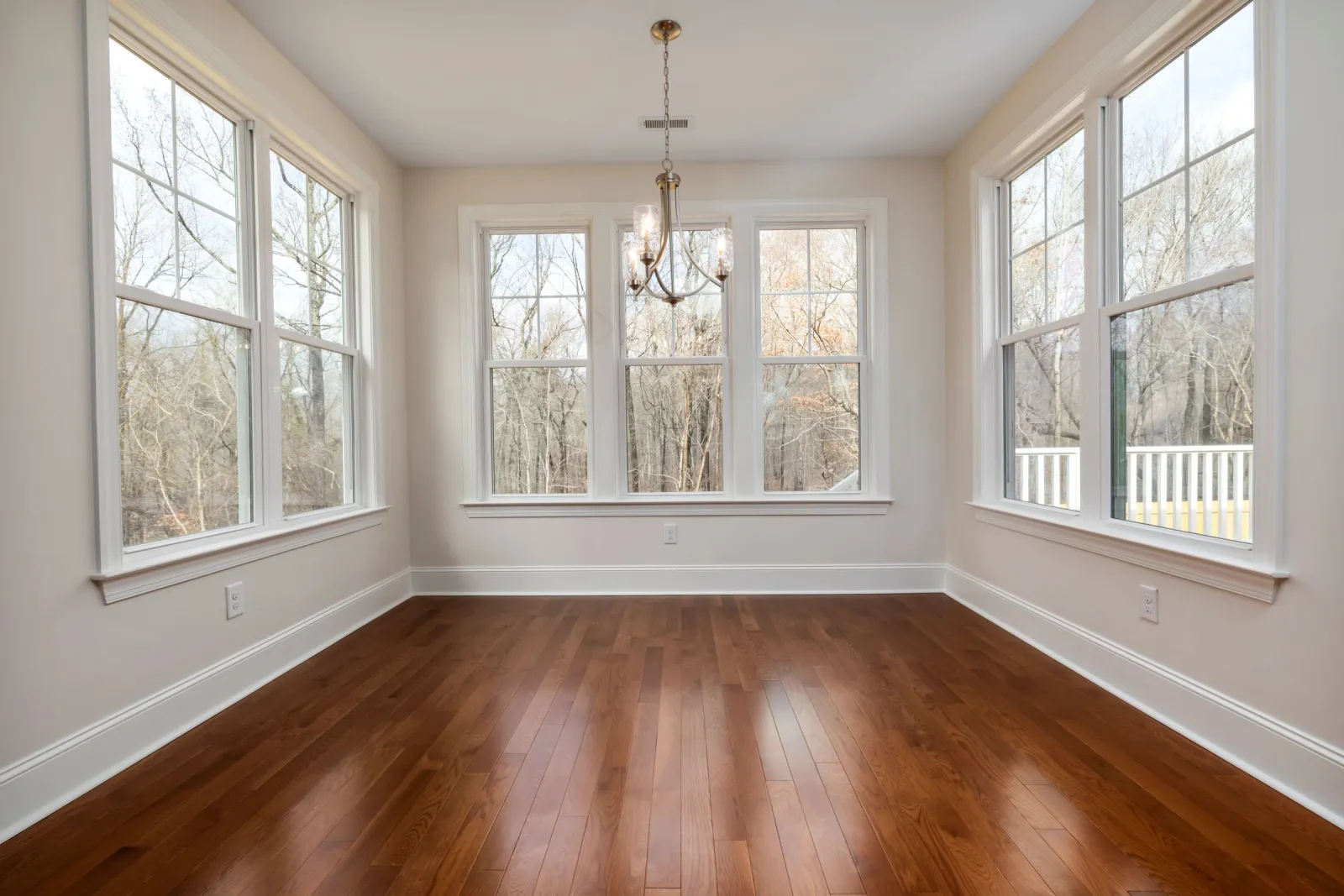
Homeowners ask us this a lot, usually with a deadline in mind: guests for Thanksgiving, a closing date, a baby due in the spring. The honest answer is that floors can be installed and refinished well in any month in the DMV. What changes from season to season is what has to be managed to get a good result, and how hard it is to get on a contractor's calendar.
Why the season matters at all: humidity
Wood takes on and gives off moisture with the air around it, and it swells and shrinks as it does. The DMV is hard on wood in both directions. Summers are long and humid, and winters bring dry heated air indoors. A solid hardwood floor is slightly wider in August than it is in February.
Most hardwood manufacturers ask for indoor relative humidity somewhere around 35 to 55 percent. Houses here drift above that in summer and below it in winter, which is why thin gaps open between boards in winter and close again by summer. Our guide to gaps and cupping explains that movement in detail. Season matters to a flooring job because the floor is installed or finished in one set of conditions and then has to live through all the others.
Spring and fall: the easiest seasons
In spring and fall, indoor humidity is usually somewhere in the middle of its range. Wood installed then is not at either extreme, so the seasonal movement afterward is more balanced. Finishes dry at a predictable pace, and the house can be ventilated without letting in heat or cold.
The tradeoff is demand. Spring brings home sales and renovations, and fall brings everyone who wants new floors before the holidays. Calendars fill up, so book earlier in these seasons.
Summer: plan around the humidity
Summer is a popular time to refinish, because many families are away and an empty house is the easiest place to work. It works well with one condition: the air conditioning stays on. Humid air slows finish drying, and a closed-up house with the AC off can reach humidity levels that cause problems for both the finish and the wood.
For new hardwood installation, summer means boards are installed at their wider, wetter state. A good installer checks the moisture of the wood and the subfloor and installs accordingly, so the floor does not open wide gaps when the heat comes on in winter.
Winter: keep the heat on
Winter is often a good time to get on a contractor's schedule once the holidays are past, and floors installed or refinished in winter turn out well if the house is kept warm. Finishes need warmth to dry and cure properly, so the heat should run at normal living temperature throughout the job, not turned down because no one is home.
Winter also changes the finish choice. Oil-based finishes need ventilation and have a strong odor that lingers in a closed house. Waterborne finishes have far less odor and dry faster, which suits a season when windows stay shut. Our finish and sheen guide compares the two.
For installation, winter means boards go in at their driest. The installer allows for the floor to swell slightly when summer humidity returns, so it does not push against walls or cup.
Vinyl plank, laminate and basements
Luxury vinyl plank and laminate are much less sensitive to humidity than solid hardwood, so the season matters far less. They still need to sit in the house at normal temperatures before installation as the manufacturer specifies, and laminate needs its expansion gap at the walls. Basement slabs should be tested for moisture whatever the month; our basement flooring guide explains why.
Working back from a deadline
If you need floors done by a specific date, count backward from it:
- Cure time. A refinished floor can be walked on within a day or so in socks, but furniture and especially rugs need longer. Allow at least a week before furniture goes back on felt pads, and a couple of weeks or more before rugs, depending on the finish. Our refinishing timeline gives the details.
- The work itself. A typical refinish takes a few days. Installation depends on the size of the house; our installation process explains the steps.
- Acclimation. New hardwood is delivered and left in the house before installation so it can adjust to indoor conditions. How long depends on the product and its measured moisture content.
- Material lead time. Common products are often available quickly, but specific widths, species or special orders can take weeks.
- Getting on the calendar. In busy seasons, contractors may be booked several weeks out.
Add those up and a hardwood project wanted before Thanksgiving should be in motion by early October. For a light refresh rather than a full sanding, a screen and recoat takes much less time and can fit a tighter window.
Selling or moving
The best time to do floors in a house you are moving into is between closing and move-in, when the rooms are empty. If you are selling, finish the floor work before listing photos. Our guide to floors before selling covers what is worth doing.
The short version
- Any season works when the house is kept at normal living conditions, with the heat or AC running.
- Spring and fall are easiest for the wood, but the busiest for calendars.
- Summer suits refinishing while you are away; keep the AC on.
- Winter suits waterborne finishes and often easier scheduling; keep the heat on.
- For a deadline, count back and start earlier than you think. Our prep checklist helps once a date is set.
Frequently asked questions
What is the best time of year to install hardwood floors in the DMV?
Spring and fall are the easiest, because indoor humidity sits between the summer and winter extremes. But hardwood can be installed well in any season as long as the house is at normal living conditions, with the heat or air conditioning running, and the wood is acclimated and installed with the season in mind.
Can you refinish hardwood floors in the winter?
Yes. Winter refinishing works well as long as the heat stays on at a normal temperature throughout the job. Finishes need warmth to dry properly, so the house should not be left cold while it is empty. Waterborne finishes are often the better choice in winter because the house cannot be aired out as easily.
Is summer a bad time to refinish floors?
Not if the air conditioning runs. Muggy DMV summers slow the drying of finishes, and a house left with the AC off can stay humid enough to cause problems. With the AC on and windows closed, summer is a popular time to refinish while the family is away on vacation.
How early should I book flooring work to be done before the holidays?
Start in early fall. Count back from the date you need the floor usable: the time to cure before rugs and furniture go back, the installation or refinishing days, acclimation for new hardwood, and any lead time for materials. For a hardwood project that needs to be done before Thanksgiving, getting estimates in September or early October gives you room.
Do vinyl plank and laminate need to be installed in a certain season?
No. They are far less sensitive to humidity than solid hardwood. They still need to sit in the house at normal temperatures before installation, as the manufacturer specifies, and laminate needs its expansion gap at the walls. Concrete slabs in basements should be moisture-tested in any season.
Have a date in mind? Request a free estimate and tell us when you need the floors done. We will give you a realistic schedule, including cure time, so you know what is possible before you commit.
Keep exploring
- → See our floor refinishing services
- → Floor refinishing in Vienna, VA
- → Hardwood flooring in Gaithersburg, MD
- → Floor refinishing in Washington, DC
- → Getting Your Floors Ready to Sell a DMV Home: Refinish, Repair or Replace?
- → Which Hardwood Finish and Sheen Should You Choose?
- → Gaps in Winter, Cupping in Summer: What Your Floor Is Telling You