F&F Surface Group · Flooring Guide
White Oak vs. Red Oak (and Maple, Hickory, Walnut): Choosing a Hardwood Species
Updated September 6, 2026 · 9 min read
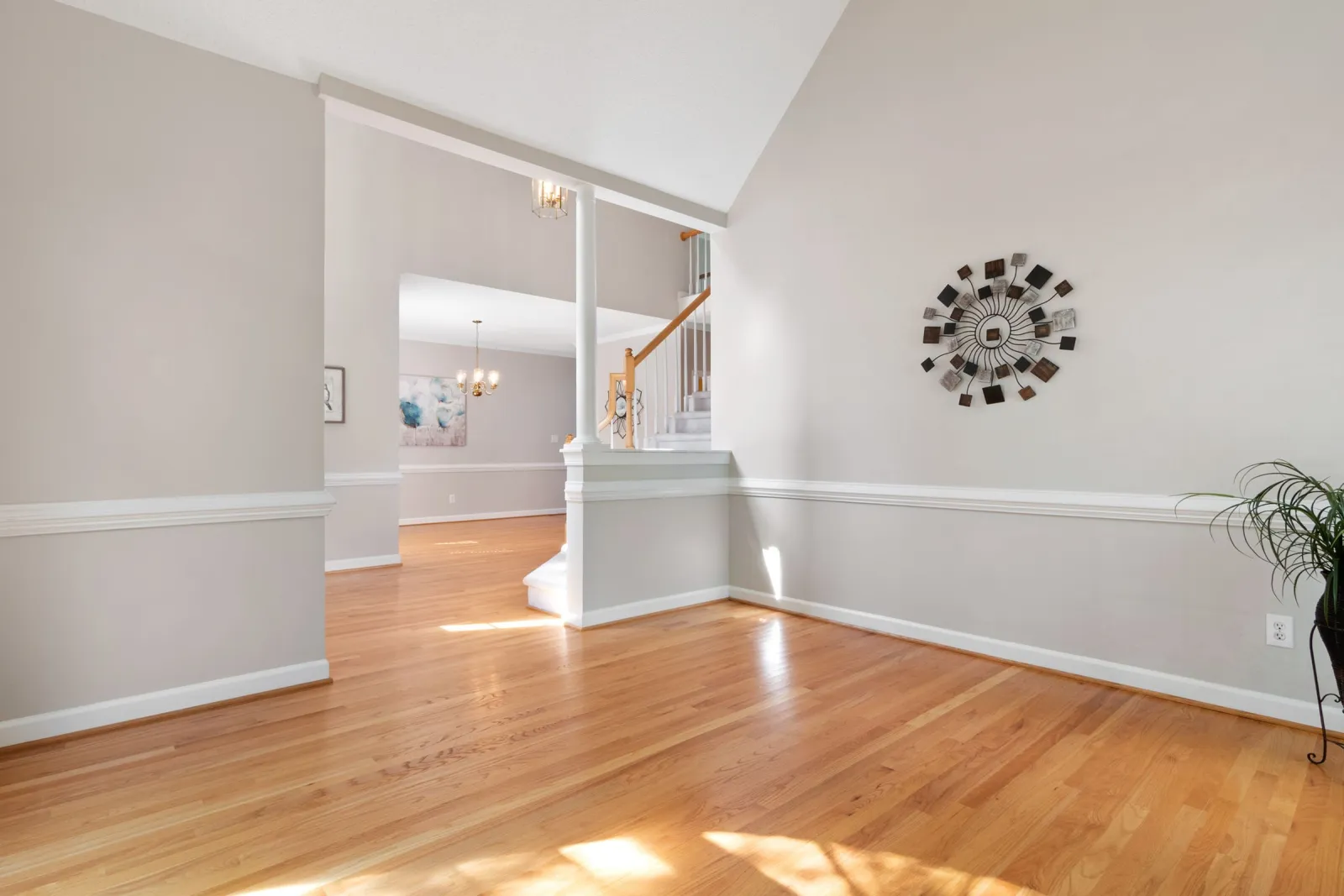
Almost every hardwood floor that already exists in the DMV is red oak. Almost every hardwood floor people ask us for now is white oak. Between those two facts sits most of the species conversation, and the rest is filled by maple, hickory and walnut, each of which is the right floor in a specific kind of room and the wrong one in another.
Here is what each species actually does underfoot and under a finish, and how to choose one for a Washington-area house rather than from a photograph.
Hardness, and what it does and does not tell you
Every species has a Janka rating, which is the force it takes to push a steel ball halfway into the wood. Higher is harder. Hickory is around 1,820, hard maple 1,450, white oak 1,360, ash 1,320, red oak 1,290 and walnut 1,010.
Hardness tells you how the floor resists dents from a dropped pan or a chair leg. It tells you almost nothing about scratches, which happen in the finish, not the wood, and are a question for the finish and sheen guide. It also cuts the other way: a very hard species is slower to sand, can be harder to stain evenly, and shows a different character under the machine. Anything from red oak up is hard enough for a family. The differences past that are about appearance and moisture.
Red oak: the floor your house probably already has
Red oak was the standard through the whole twentieth century, and it still is what you find under the carpet in a Levitt house in Bowie, a colonial in Kensington or a rambler in Wheaton. It is widely available, moderately priced, hard enough, and it takes stain readily.
Its defining trait is a pink-to-red undertone that sits under whatever you put on it. Warm browns look excellent on red oak. Grays and pale Scandinavian finishes fight it and often read muddy or faintly pink, which is the single most common disappointment in refinishing and the subject of our stain color guide. The grain is open and pronounced, which hides wear well.
Choose red oak when you are matching an existing floor, when you want a traditional warm brown, or when budget matters and the finish will be a mid-tone. Refinishing the red oak that is already there is very often the better job than replacing it.
White oak: the one everyone is asking for
White oak is slightly harder than red, its pores are closed rather than open, which makes it more water-resistant and the reason it is used for boats and barrels, and its undertone is neutral to golden-brown with none of the pink. That neutrality is why it is the species behind nearly every wide-plank, matte, natural or greige floor being photographed right now. Stain it dark and it goes rich; leave it natural under a water-based finish and it stays pale and clean.
The trade-offs are price, which has climbed with demand, and the fact that a lot of the look people want depends on a specific cut and grade. Rift-and-quartered white oak has a straight, tight grain and dramatic ray fleck; plain-sawn has the cathedral pattern. Character grade shows knots and color variation; select does not. Two white oak floors can look nothing like each other, so specify the cut and grade, not just the species.
Choose white oak for a wide-plank floor, for anything gray, natural, pale or matte, for a kitchen or a room that sees moisture, and for a modern or transitional house. It is available in both solid and engineered, and for the widest planks the engineered version is the stable one in this climate. Most species on this list also come prefinished, which fixes the color at the factory, or unfinished as solid boards to be stained on site.
Maple: clean, pale, and unforgiving
Hard maple is very hard, very pale, and nearly grainless, which gives it a smooth, contemporary, almost Scandinavian look without stain. Gymnasium and bowling-alley floors are maple for a reason.
Two cautions. Maple takes stain badly: its tight grain absorbs unevenly and a dark stain on maple often goes blotchy, so it is best left natural or very lightly toned. And its smoothness means every scratch shows, because there is no grain to hide it, particularly under a gloss finish. In a house with a large dog, a maple floor is the one you will see the claws in.
Choose maple for a light, modern, minimal room in a house without heavy traffic, and finish it natural in satin or matte.
Hickory: the hardest, and the busiest
Hickory is the hardest domestic species commonly used for floors, and it wears like it. It also has the most dramatic color variation of any of them: a single board can run from pale cream to deep brown, with strong grain and knots in the rustic grades. That makes it the most forgiving floor there is for dents, scratches, dirt and dog hair, and also the busiest-looking.
Choose hickory for a family room, a mudroom-adjacent floor, a farmhouse or rustic look, or a house with big dogs. Avoid it where a calm, uniform floor is the goal. It is harder to sand and takes stain unevenly across its color range, so it is usually finished natural or with a light toner.
Walnut: the beautiful one that needs care
American walnut is the color people are trying to reach when they stain oak dark: a deep, rich chocolate brown with purple undertones and a fine, straight grain, and it needs no stain at all to get there. It is also the softest species on this list by a wide margin.
A walnut floor in a formal living room, a study or a bedroom in a McLean or Potomac house is a genuinely beautiful thing. A walnut floor in a kitchen with three kids will dent, and dark walnut shows every dent and every speck of dust. Its natural color also lightens with sun exposure over years, so a rug moved after a decade leaves a visible shadow. Choose walnut for low-traffic rooms where color matters most, and finish it matte.
The exotics, briefly
Brazilian cherry, cumaru, ipe and the other imported species are harder than anything above and were popular here in the 2000s. They are a different conversation with their own quirks, and our exotic hardwood guide covers them.
Choosing for a DMV house
- Matching what is already there in an older home: red oak, same width and grade, site-finished with the existing floor.
- Wide plank, natural or gray, modern or transitional: white oak, engineered for anything over five inches, cut and grade specified.
- Traditional warm brown on a budget: red oak, stained.
- Big dogs, kids, mud: hickory or white oak, character grade, matte.
- Pale, quiet, minimal: maple, natural, satin.
- Rich dark color in a low-traffic room: walnut, natural, matte.
Whatever the species, the DMV's humidity swing means acclimation and a moisture check on the subfloor matter more than the wood, and the installation itself decides how the floor behaves for the next thirty years.
Frequently asked questions
What is the difference between white oak and red oak flooring?
Red oak has a pink-to-red undertone, a more open, pronounced grain, and a slightly softer surface. White oak is a touch harder, more water-resistant because its pores are closed, and its undertone is neutral to golden-brown, which is why it takes gray, natural and greige finishes so well. Most existing DMV floors are red oak; most new floors being specified today are white oak.
Which hardwood is the most durable for floors?
Of the common species, hickory is the hardest, followed by hard maple, white oak, ash and red oak, with walnut noticeably softer. Hardness resists dents. It does not resist scratches, which are a finish question, and a very hard species can be harder to sand and stain evenly.
What is the best hardwood for dogs?
A harder species with visible grain and a matte finish: white oak or hickory. Grain and texture hide claw marks; a satin or matte finish hides them further. Dark, smooth, glossy maple is the worst combination, because every scratch shows as a pale line.
Can I match new hardwood to the existing red oak in my house?
Yes, and it is a common job in older Bethesda, Silver Spring and Arlington homes. Matching species, width and grade is the first step, and site-finishing both old and new together with the same stain is what makes the seam disappear. A prefinished board almost never matches an existing site-finished floor exactly.
Is white oak more expensive than red oak?
Usually, by a moderate margin, because demand for white oak has climbed and supply has not kept pace. The gap is smaller than the difference between grades within either species, and a select red oak often costs more than a character-grade white oak.
We bring species samples to the house, in the cuts and grades you are actually considering, and lay them in your light against your trim, because that is the only comparison that predicts the finished floor. Request a free in-home estimate and we will help you choose.
Keep exploring
- → See our hardwood flooring installation
- → Hardwood flooring in Chevy Chase, MD
- → Hardwood flooring in Fairfax, VA
- → Choosing a Stain Color: What Stain Can and Cannot Do
- → How Hardwood Floors Are Installed: Nail-Down, Glue-Down and Floating, Day by Day
- → Refinish or Replace? How to Tell What Your Floor Needs